
For years, we’ve been working to preserve game history.
In 2025, we delivered.
This has been the biggest year ever for the Video Game History Foundation. We’ve launched major new projects that were years in the making — and changed how video game history is being studied.
This week, we’re kicking off our annual winter fundraiser for our non-profit organization. As we head into the holidays, we’re recapping what we accomplished this year thanks to your support…
We opened our digital library.
After years in development, the Video Game History Foundation finally launched our digital library in early access. We’ve built a powerful tool that makes it easier than ever to study the history of video games using magazine scans, development and promotional materials, event guides, and more rare and unique archival materials.
Our library launched with major collections like the Mark Flitman papers, from the long-time Chicago-area game producer behind titles like Maximum Carnage and MLB Slugfest; and the Cyan collection, featuring hundreds of hours of videos from the making of the Myst series.
The Video Game History Foundation Library is the base for everything we do. We find history, we preserve it, and we share it with researchers who need it.
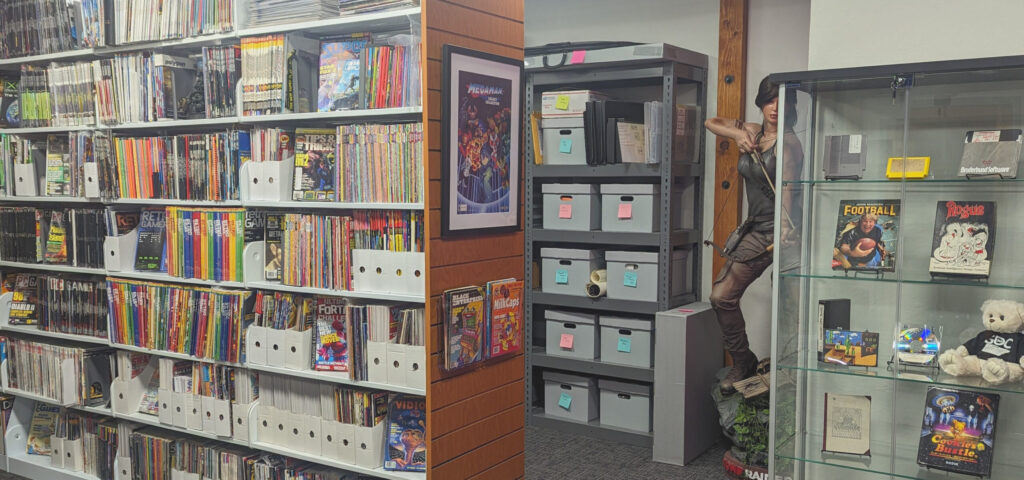
…and our library kept growing.
But we didn’t stop there! Thanks to your ongoing support, our digital library has nearly doubled in size since launch.
We’ve scanned and shared hundreds of rare out-of-print magazines, including game industry trade magazines rarely seen by the public. Our library of press assets now tops 20,000 pieces of digital game art.
There’s exciting new collections of developer materials, like the Andrew Nelson papers, from the creative director of Titanic: Adventure Out of Time; the artwork and designs by Craig Stitt, artist for Sonic the Hedgehog 2 and Spyro the Dragon; and the correspondence and work documents from the former VP of technology at Activision.
Our digital library is on a roll, and we have no plans to slow down. As we keep growing, we’re continuing to visit developers and build new archival collections that help researchers understand the history of games.
Expect to see more materials added to our library as we keep processing them. We’ll have more announcements in the future. There might even be some new things before the end of the year…
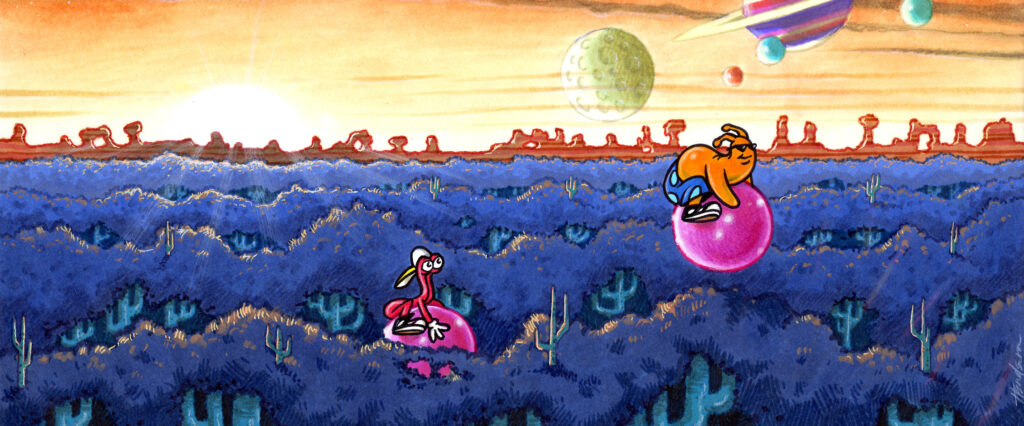
Our library in use
Within the first year, our library is already being used by researchers to help tell stories about video game history.
We’ve seen items in our library show up in videos from creators like Jeremy Parish, and even groups you might not think of as researchers, like Giant Bomb. Magazine scans and catalog info from our library were used in the FMV Zone exhibit at this year’s Portland Retro Gaming Expo. We weren’t even involved with the PRGE museum this year, but our resources helped the people who were!
Our library materials have also appeared in commercial video game projects! You can find historical assets from the Video Game History Foundation Library in game collections like Mortal Kombat: Legacy Kollection, GEX Trilogy, Bubsy in: The Purrfect Collection, and Atari 50: The Namco Legendary Pack. Our library has also supported the digital archives of Electronic Gaming Monthly and Game Informer, which use scans by the Video Game History Foundation.
Our goal has been to make a resource that helps anyone — from individual researchers to the game industry — tell video game history better. Now we get to see that vision in action.
The Video Game History Hour is back!
This year, we launched Season 2 of our podcast, the Video Game History Hour. Every other week, we’ve brought you interviews that dig deep into the world of video game history and preservation. We’ve chatted with everyone from storied game designers to copyright lawyers to researchers taking new angles on the history of games.
We’re also using our podcast to amplify our preservation work. Many of our guests have actually donated collections to our library! Having them on the show gives us a chance to talk more about their work and the types of stories you can tell with their materials.
We’re heartened by the positive response to bringing back the show. And yes, the Video Game History Hour will continue in 2026! If you’re a fan of the podcast, you can join our Patreon Discord ($10/month), where viewers can submit questions for upcoming episodes.
History on the road
Once again, we brought game history out to the community. At multiple events across the United States, we staged unique exhibits and one-of-a-kind panels to celebrate the history of video games.
At the Game Developers Conference, we ran “Lost Levels: Unreleased Games for the Nintendo Entertainment System,” an exhibit celebrating unfinished projects and their afterlives. We also demoed our digital library to attendees — and even solicited some new collections from developers! At the same event, our director Frank Cifaldi and library director Phil Salvador both presented on panels about the state of video game history and how this field is developing.
Then, at the Portland Retro Gaming Expo, we hosted “We Launched the NES 40 Years Ago Today,” a reunion panel featuring some of the key staff behind the debut of Nintendo’s first American home console. This was a rare gathering of key historical figures that’s unlikely to happen again.
With high demand for game history content, we also looked for new ways to bring ourselves to events… without having to build a giant museum exhibit.
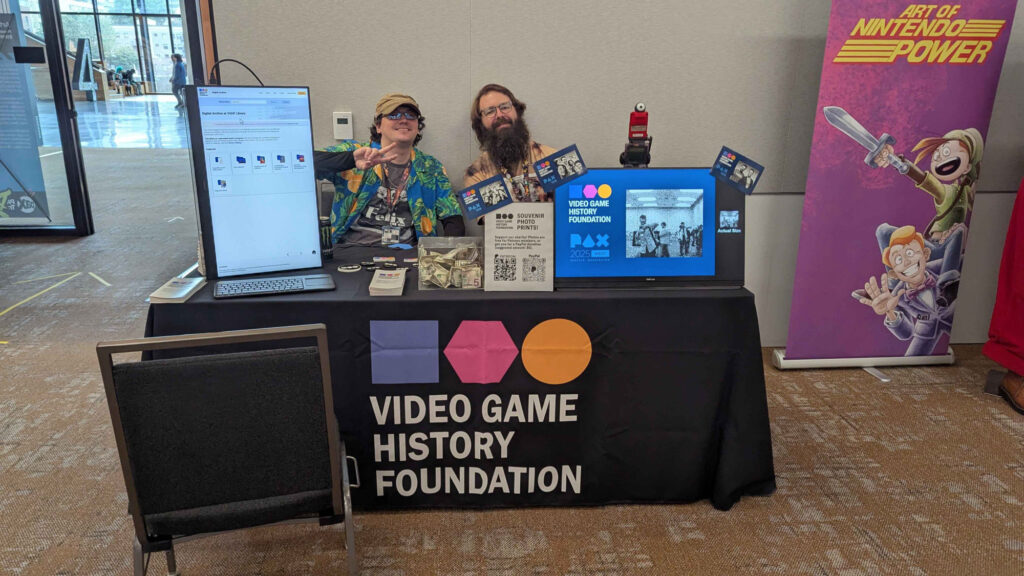
At PAX West in August, we tried out a new “booth in a box,” which lets us easily run a pop-up library demo wherever there’s room. Nimble solutions like this open the door for us to share our work in-person at more events.
Building our community
Game history enthusiasts are the bedrock of our organization. As we continue to grow, we’re supporting the communities that support us.
Throughout the year, we’ve taken the time to talk with library students about our expertise. Programs like the University of Washington Information School and the Moving Image Archiving and Preservation program at NYU Tisch have invited us to speak about our work. We’ve also met one-and-one with students who are entering game preservation to help them understand this exciting new field.
To foster a stronger community of historians and preservationists, we’ve started running more online events, like streams where we unpack new collections on-camera, or community hangouts on our Patreon Discord run by our programming director Robin Kunimune.
And of course, we want to give back to the community groups that are part of the game preservation ecosystem. We’ve contributed back some of our materials, like magazine scans, to sites like Retromags, Gaming Alexandria, and CGW Museum to support their own efforts.
Making history better with your support
We’ve gotten this far thanks to your generosity. We have big plans for 2026, including more collections, new special projects, and more opportunities to bring game history to the community and the industry.
We’re counting on your support to power us for the next year. If you’ve appreciated what we did in 2025, head over to gamehistory.org/donate to join our annual winter fundraiser.
…and that’s not all!
We still have more to go this year! We’ll be sharing some treats throughout December. Keep your eyes peeled on this blog and our social media for more information!
December 8
A state-of-the-field GDC talk
December 10
A new old game, finished 34 years later
December 15
YouTube premiere — a lost chapter of Sega history
December 17
Dumping mystery ROMs, live on stream!
December 25
Our final (?) word on the launch of the NES