This week, we’re launching multiple new collections in our digital archive celebrating the history of the Electronic Entertainment Expo.
For over 20 years, E3 was the highest-profile event in video games. Founded in 1995 by the Interactive Digital Software Association and Infotainment World, E3 was a larger-than-life spectacle that celebrated the present and future of gaming. Although nominally a trade show, E3 has become renowned for its over-the-top booths and marketing gimmicks, dramatic press conference reveals, and generally putting a massive spotlight on the games business.
It’s easier now to look back and say, Of course E3 existed. Of course video games are a big deal. But that wasn’t always a sure thing. Before E3, the big showcase for the American game industry was the Consumer Electronics Show, a massive trade show, where video games were just another product on display with the cameras, televisions, and karaoke machines.
After a series of disappointing, low-key conferences, the industry decided it was time to put on an event of their own, where games would be the star attraction. At a time when the game industry was going through explosive growth, E3 reflected the massive cultural force that they believed video games could become.
Over the past year, we’ve received some exciting donations from the people who ran and attended E3, going all the way back to its first year in 1995. We’re excited to preserve this important history—and to make it available for anyone studying the history of E3, for free.
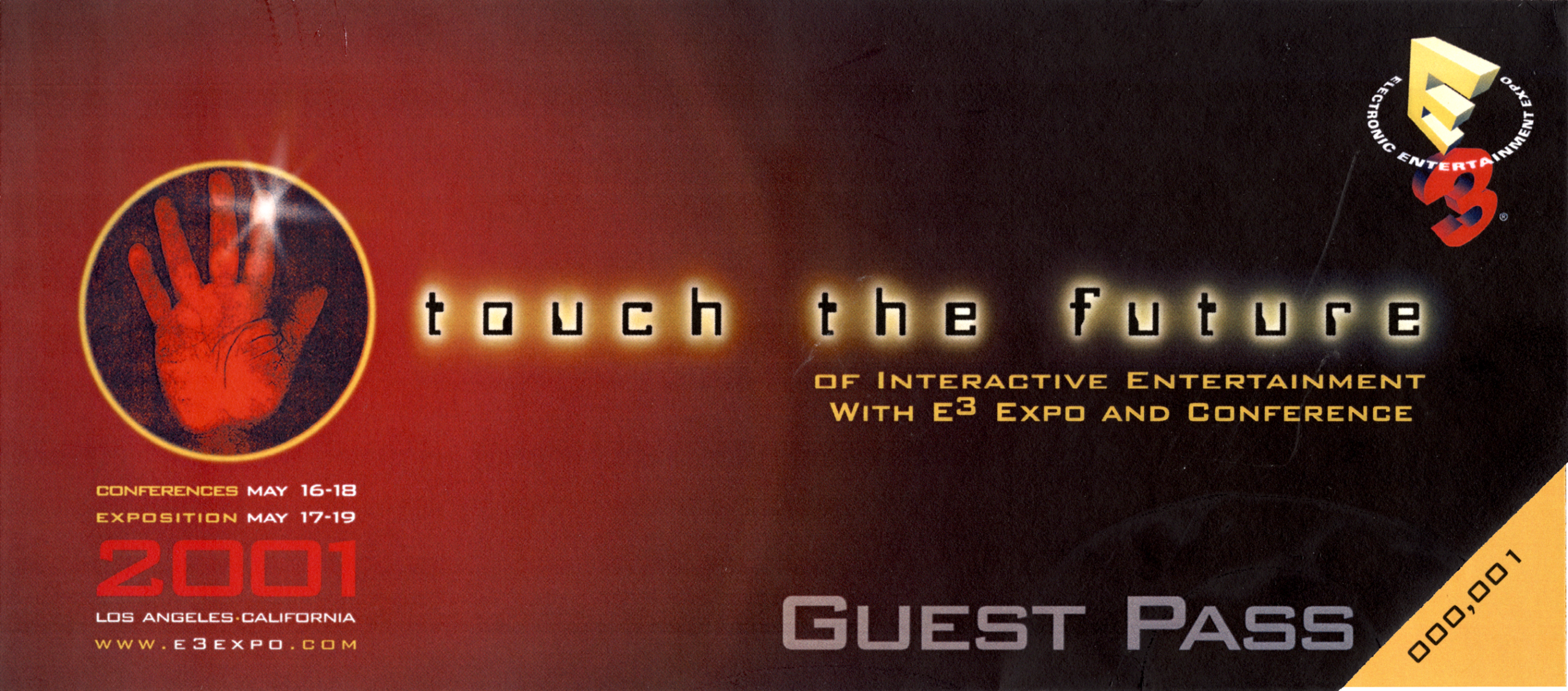
Carolyn Rauch event ephemera collection
Donated by founding IDSA member Carolyn Rauch, this collection includes over 1000 pages of ephemera from the history of the Electronic Entertainment Expo, E for All, and the Game Marketing Summit.
As senior vice president of the IDSA, Rauch oversaw E3 for almost the entire run of the event. She kept a significant collection of promo material for the event itself, including flyers, brochures, press kits, guest passes, event photographs, panel transcripts, industry reports, and much more.
This collection—maybe one of the single largest collections of E3 ephemera—is an exhaustive snapshot of the public face of the event from 1996–2011. Reading through these materials, you can see the organizers trying to balance the intense public interest in video games with the professional demands of the event.
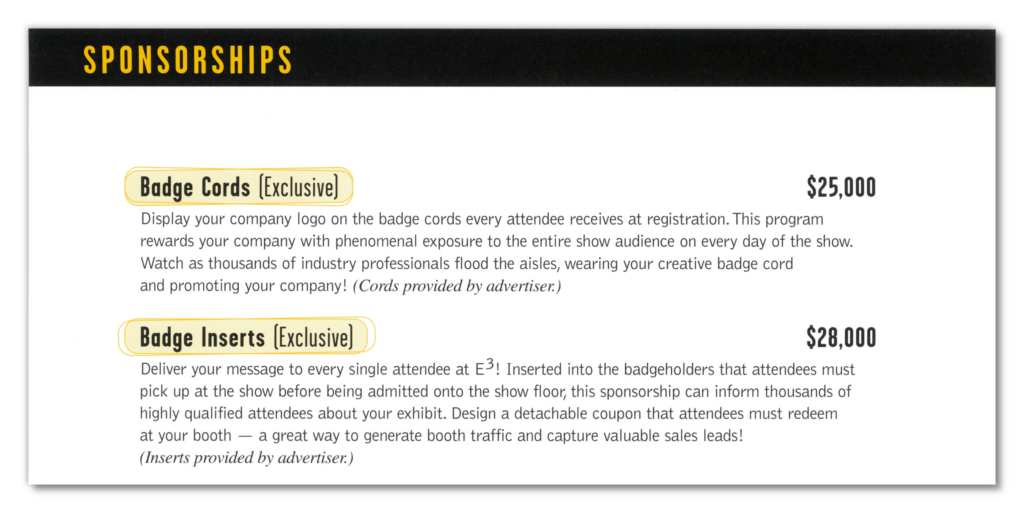
Many of the materials in this collection were meant for the exhibitors and advertisers, a different side of E3 than you might be used to seeing! For instance, if you were promoting a game at E3 1999, would you spend $25,000 to put your logo on the badge lanyards that year?
This collection also includes items from the E3 Media & Business Summit, an event held in 2007 and 2008 as a small-scale replacement for the colossal E3 trade shows. These invitation-only business events are rarely discussed in game history, and we’re excited to provide researchers with a glimpse into what it was like to attend these shows.
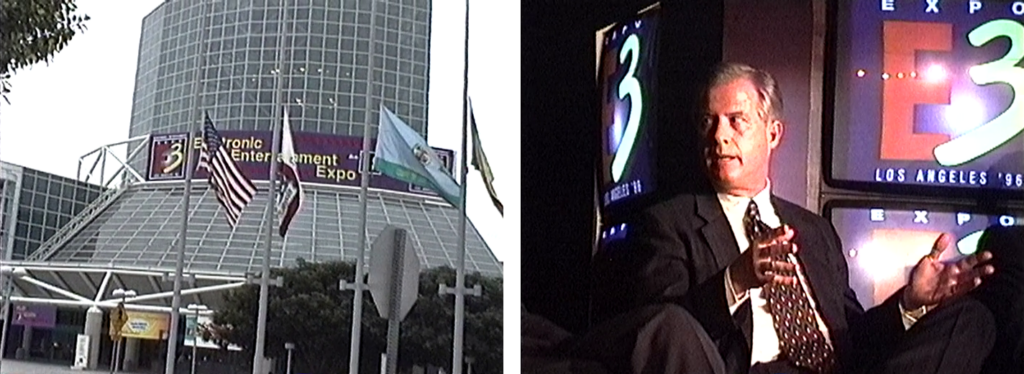
Anthony Parisi tapes
Anthony Parisi attended the first four E3 events, and each year, he brought his camcorder to film press conferences and game footage. If you’ve looked for videos of E3 before, you might have seen some of Parisi’s footage on YouTube.
We’re excited to share that Anthony Parisi has donated the copyrights for these videos to the Video Game History Foundation! We’ve redigitized nearly 12 hours of video from Parisi, documenting the foundational years of the event.
These tapes contain hours of footage from development builds of games, often making their first debut in the United States. You can step into the shoes of an E3 attendee and watch people experience iconic games like Super Mario 64 or Castlevania: Symphony of the Night for the first time, before they hit stores.
These videos also have some of the only known footage of the keynotes and conferences from the first E3s. We’re proud to preserve these landmark moments in game history, like the surprise launch of the Sega Saturn, or Sony’s mic-drop moment when they announced a $299 price point for the PlayStation.
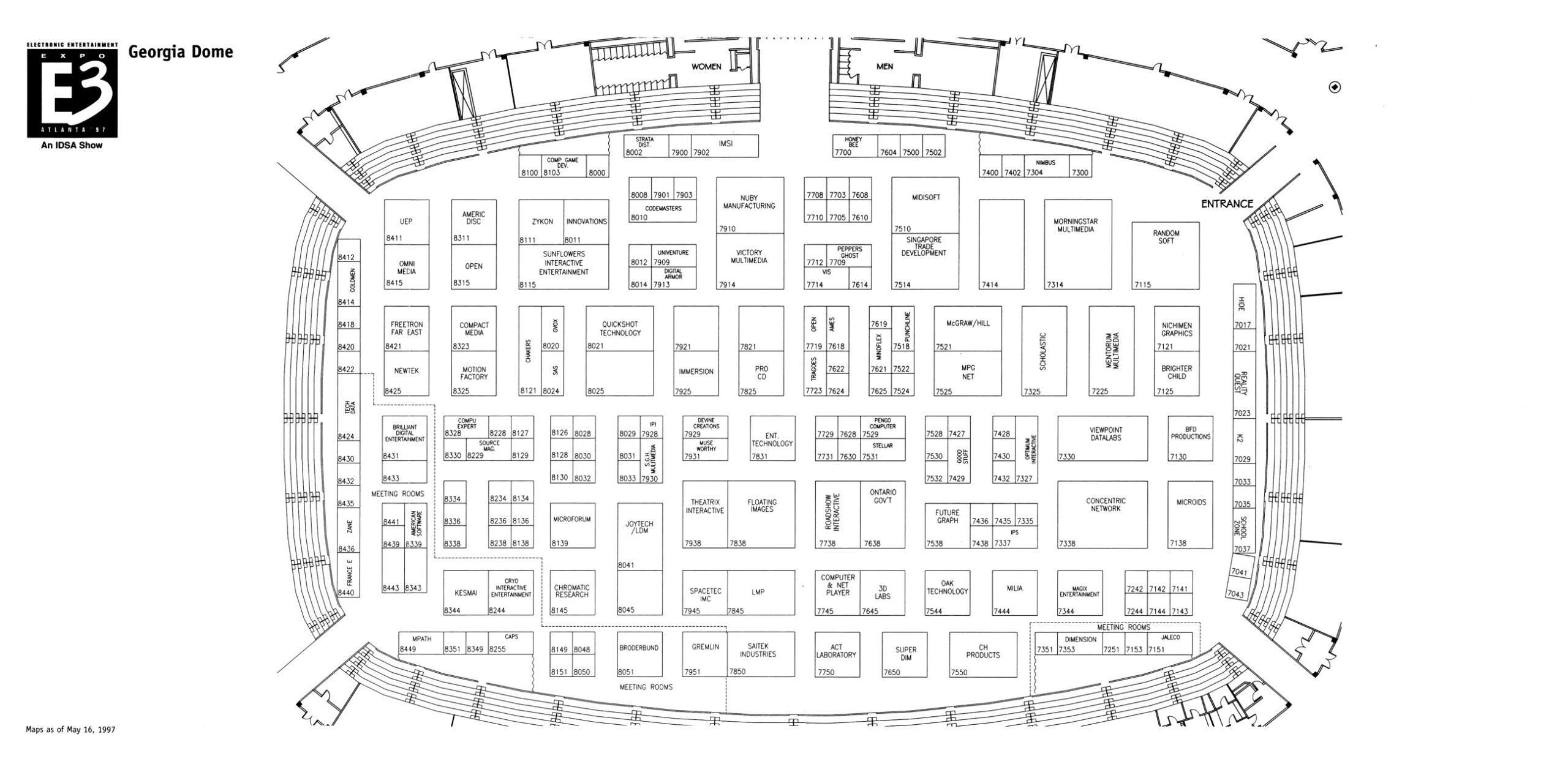
Guides and news
Thanks to Carolyn Rauch—and many other donors over the years!—we’ve completed our digitized collection of E3 directory books, published from 1995–2006. These books contain complete maps and lists of every booth, company, and presentation at E3, making them an invaluable historical resource for studying the event. We first mentioned these directories when we launched our digital archive last year, but we’ve now digitized all 2500 pages.
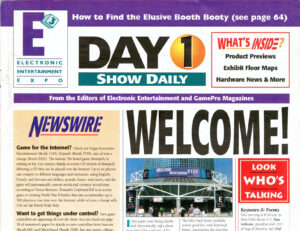
We’ve also added new scans of E3 Show Daily from 1995 and 1997. E3 Show Daily was the daily newspaper of the Electronic Entertainment Expo, profiling exhibitors at the event and sharing breaking news. They would even talk about after-hours events, like corporate parties and local nightlife, which you’d never see in the gaming press.
These scans join our existing collection of E3 Show Daily, now covering 1500 pages of daily news from throughout E3’s history. We’re proud to continue building our digital collection of these magazines, which form an important first-hand record of what was happening day-to-day at the event.
…and even more videos!
We went all-out for this celebration and digitized even more E3 videos from our collections. These additional tapes (which we’ve cataloged under “Event videos, assorted“) come from Subspace Publishers and Tronix Multimedia, two long-defunct groups that attended early E3s and reported back from the show floor.
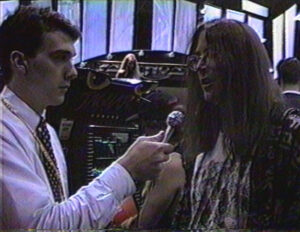
These videos contain hours of show direct-feed game capture and show footage, including some corners of the events that nobody else was covering. In particular, we love the videotape from Atari Explorer Online, which exclusively covered Atari Jaguar games at E3 1995. Who else, if not them, would have interviewed cult-favorite developer Jeff Minter about his game Defender 2000? Decades down the road, this type of citizen journalism is important for building a fuller picture of game history.
We also added a few tapes of B-roll that Sony and Nintendo distributed to the press. These tapes from E3 1995–1998 include pre-release footage of games like Super Mario 64, Crash Bandicoot Warped, and Star Fox 64.
Notably, Nintendo’s B-roll tape from E3 1997 includes a solid 1½ minutes of footage from Rareware’s infamously unreleased game Conker’s Quest, presented here at the highest quality it has ever been seen.
Learn more from the founders
We wanted to learn more about the early history of E3, so on the Video Game History Hour podcast, we interviewed Carolyn Rauch and special guest Doug Lowenstein, the founder of the Interactive Digital Software Association. Carolyn and Doug shared their recollections about the founding of E3 and the challenges the event faced as video game marketing evolved in the 2000s.
We’re grateful that Carolyn and Doug took the time to sit down with us and share their experiences. We believe may be their first joint interview together about E3!
Thoughts from the showrunner
If you listen to our podcast episode, we also mention Mary Dolaher, the long-time event director of E3 and eventual CEO of IDG World Expo. Mary was the one running the actual show on the ground floor and was instrumental in making E3 a success for over two decades.
We invited Mary to share her reflections on her time with E3—and what mattered to her about the event.
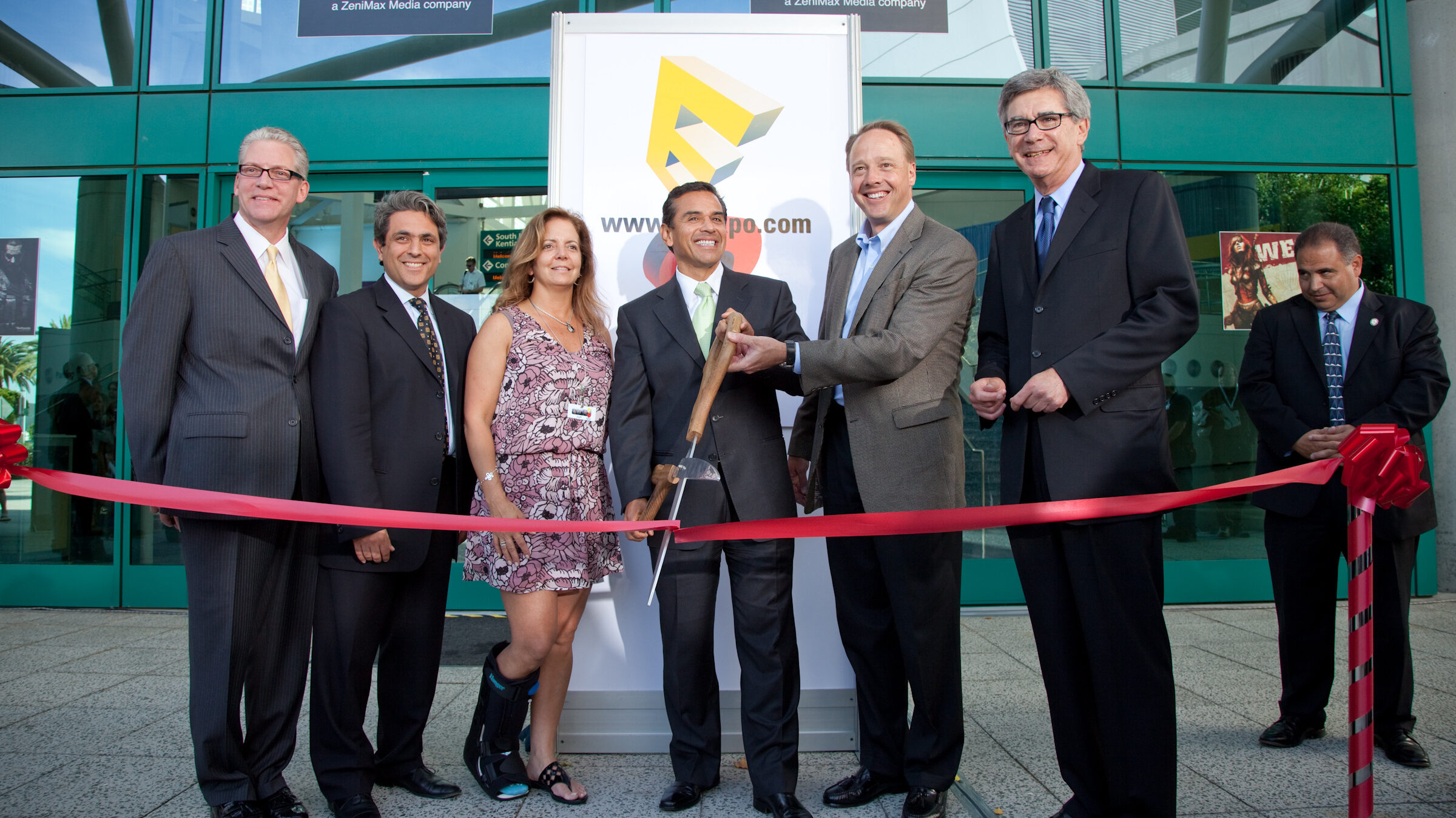
I was responsible for the day-to-day operations of E3 from its inception to its demise. I oversaw every detail of the event, from rolling the carpet to hanging tanks from the ceiling to making sure garbage cans were placed correctly. I was also part of the strategic planning process for the event, made sure the programming was set and ran correctly, and worked with ESA members and other exhibitors throughout. The list goes on.
The stories are too numerous to recount: power outages on day one, limo drivers fighting in front of the Los Angeles Convention Center, Marines rappelling down the side of the building, shutting down booths that refused to comply with noise rules, disarming rap stars who wanted to attend, wrangling celebrities and their kids.
E3 was its own world—its own community, its own celebration. We sold every square inch of the LACC—and beyond it, into the surrounding hotels and streets: bus wraps, elevator graphics, mirror clings in hotel rooms, giant Post-it note collages, chalk art. You had to be there to understand the enormity, the noise, and the impact it had on the industry and beyond.
For me, the best part of E3 was inviting Make-A-Wish kids to the event every year. They were so awed by the event and beyond thrilled to be there. E3 had so many amazing, under-recognized impacts, from putting food on the table for laborers to shaping the next generation of game designers, and Make-A-Wish is one of the most profound examples.
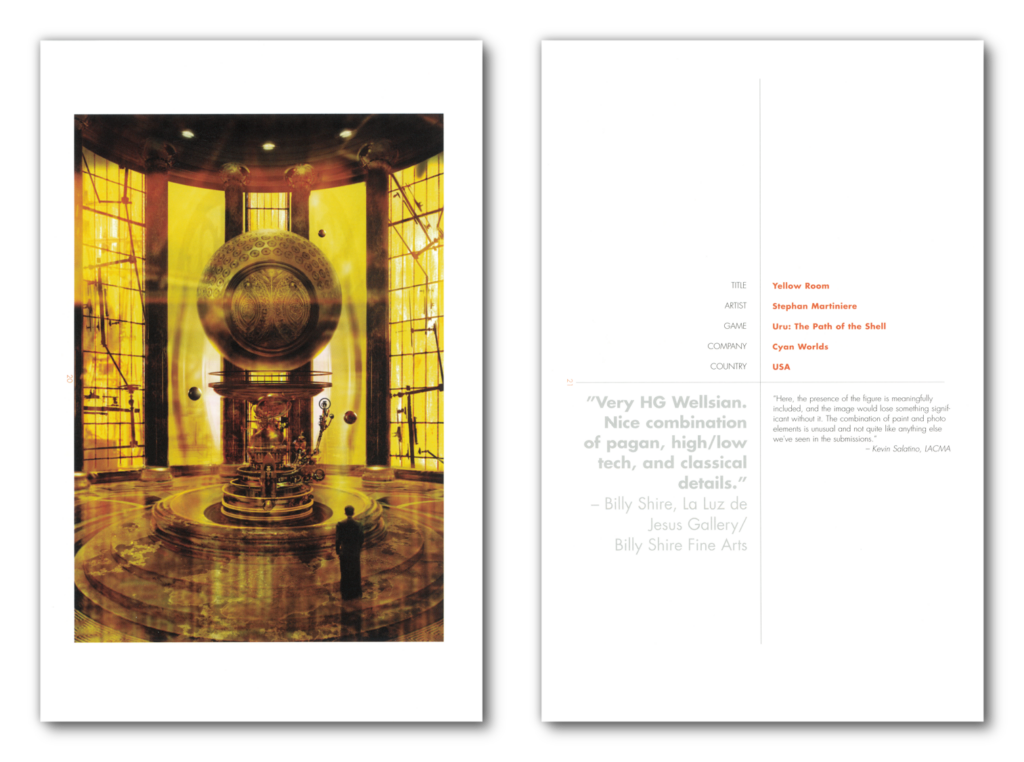
Finally, I want to mention Into the Pixel—a groundbreaking program that presented video game graphics as the art they truly are, not just “gameplay.” We held an annual exhibit at E3 that often traveled the world afterward, helping people inside and outside the industry see past the stereotype of games as “bad” or “childish” to the beauty and artistry within.
I’m so proud of what E3 became and the impact it had on the industry and the community. I will always value the memories and the friendship, and I’m glad to see these stories being preserved.
These collections are part of our ongoing commitment to preserving and celebrating the history of video games. With these new additions, the resources in our digital archive make it possible for anyone—from fans to academic researchers—to tell the story of E3.
(We also took this opportunity to further improve our digital library interface to make these new materials shine. Check out our new image viewer!)
There’s still so much to cover here, so over the next weeks, we’ll be sharing more highlights from our collections and essays from industry figures who attended the first E3 events. Stay tuned on this blog and our YouTube channel for more stories!
Start your research
Thousands of pages of ephemera from the long-time organizer of E3.
Nearly 12 hours of conferences and gameplay footage from the early years of the event.
Every booth, every map, every panel, from 1995–2006.
Daily news updates from E3, currently covering ten years of the event.
High-quality VHS rips of pre-release Nintendo 64 game footage, including Super Mario 64.
E3 event footage and gameplay, recorded while roaming the show floor.