The Video Game History Foundation has added over 5000 total magazines to our digital archive, a major milestone in our project to build a first-in-class video game history research library.
When we launched our digital archive last year, we announced an initial collection of over 1500 out-of-print, text-searchable magazines, which are free for research access. In the time since we launched, we’ve more than tripled the size of that collection—now totaling nearly 600,000 pages, the equivalent of nearly 100 feet of shelf space!
Our magazine library now spans 46 years of video game history, from 1981–2026. Major new additions since launch include hundreds of trade magazines, a historically significant newsletter, and publications for niche gaming communities. Altogether, these account for about 60 percent of the Video Game History Foundation’s entire physical magazine collection that we’ve cataloged so far.
This milestone would not have been possible without support from community-run scanning projects. With our combined efforts, we’ve turned their magazine scans into a powerful research tool.
Around one-third of the magazines in our digital archive were digitized by the Video Game History Foundation, with the rest provided by external groups. We want to thank the groups and individuals who have helped:
- The community-run scanning groups Retromags, Out-of-Print Archive, Sega Retro, AtariAge, Atari Compendium, CGW Museum, The Odyssey² Homepage, TOSEC-PIX, eXoDOS, and Gaming Alexandria.
- Industry partners and alumni from Electronic Gaming Monthly, Game Developer, Game Informer, and MCV.
- …and a special shoutout to VGHF Patreon member Chris Chapman, who provided us with 157 scans and digital magazines, the most of any unaffiliated contributor.
It’s only been a year and a half since we launched our digital archive, but we’re already seeing its transformative effect on video game history research. In fact, the VGHF Digital Archive has already become the preferred reference source for out-of-print game magazines on Wikipedia, with over 500 citations and counting. We’re grateful that researchers have responded so quickly to our vision for a well-organized, freely accessible research platform.
We have also heard from the community about what additional features and series they’d like to see in our magazine library. We’ve taken that feedback to heart, and that’s helped us decide where we’re heading next.
Introducing Japanese magazines
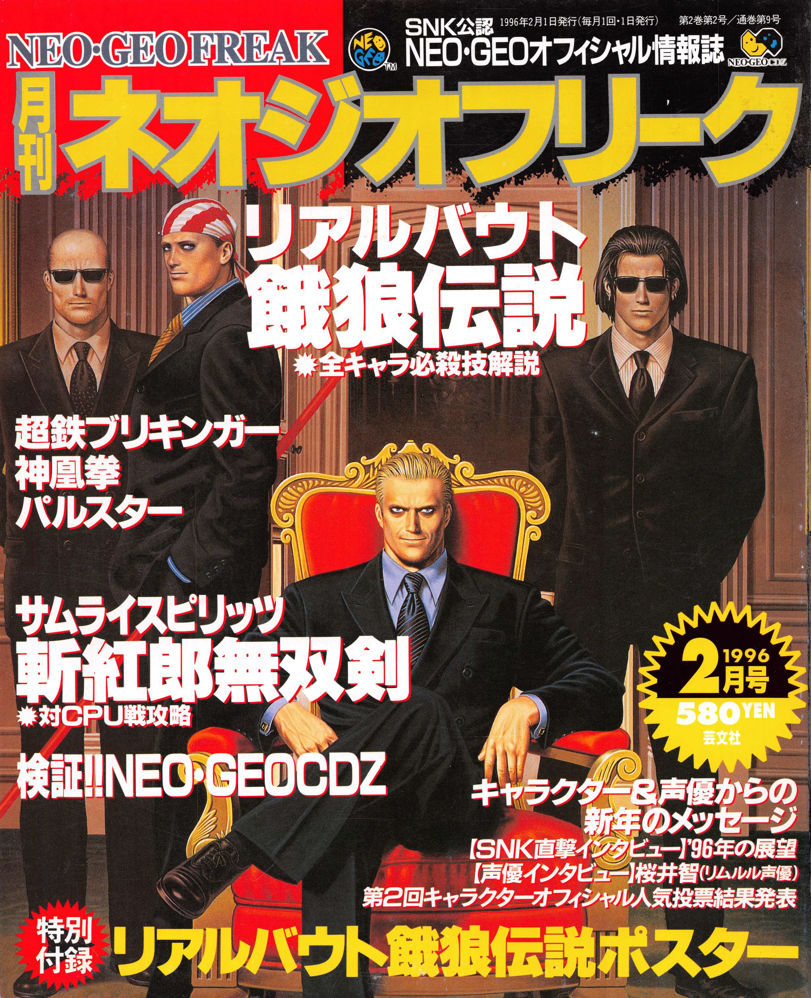
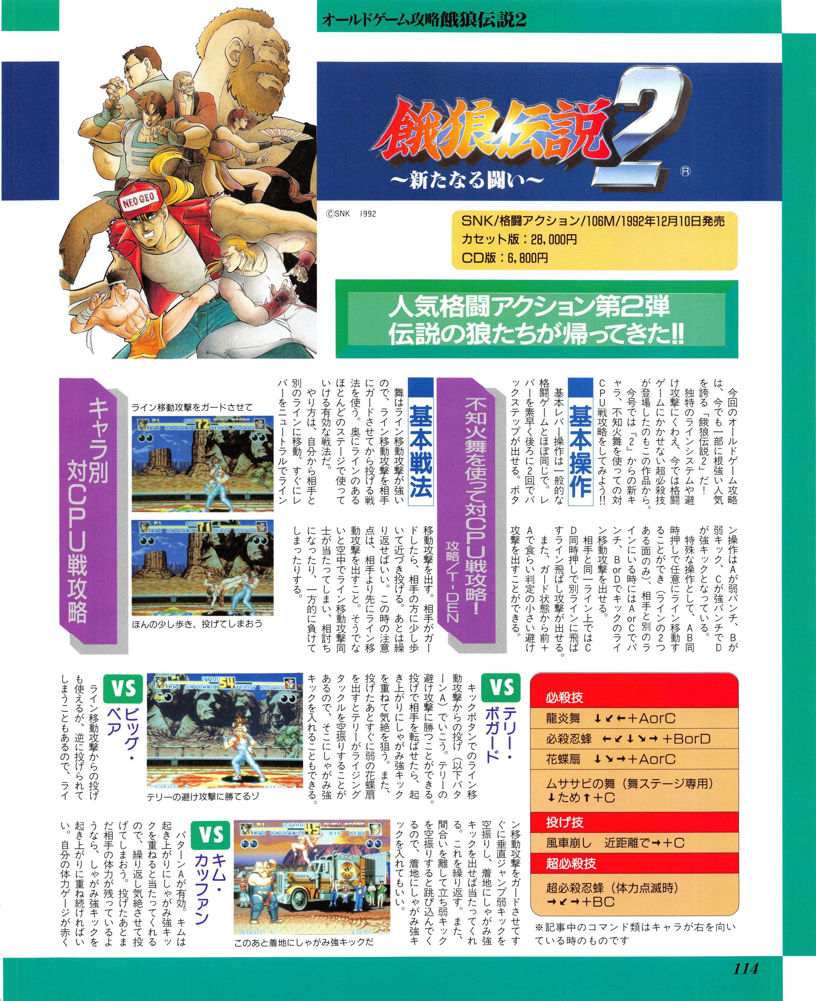
You asked, and we’ve delivered: we are now supporting Japanese-language magazines in our digital archive.
Japanese magazines are a vital resource for studying video game history; in particular, they can be a rich source for interviews with developers—most of which have rarely if ever been reprinted—and first-hand accounts of Japanese player culture.
While there are a number of community projects to digitize Japanese magazines, they’ve often been met with unique cultural and legal challenges. We intend for our digital archive to build on the community’s work, much like we’ve done for English-language magazines.
How we’re doing it
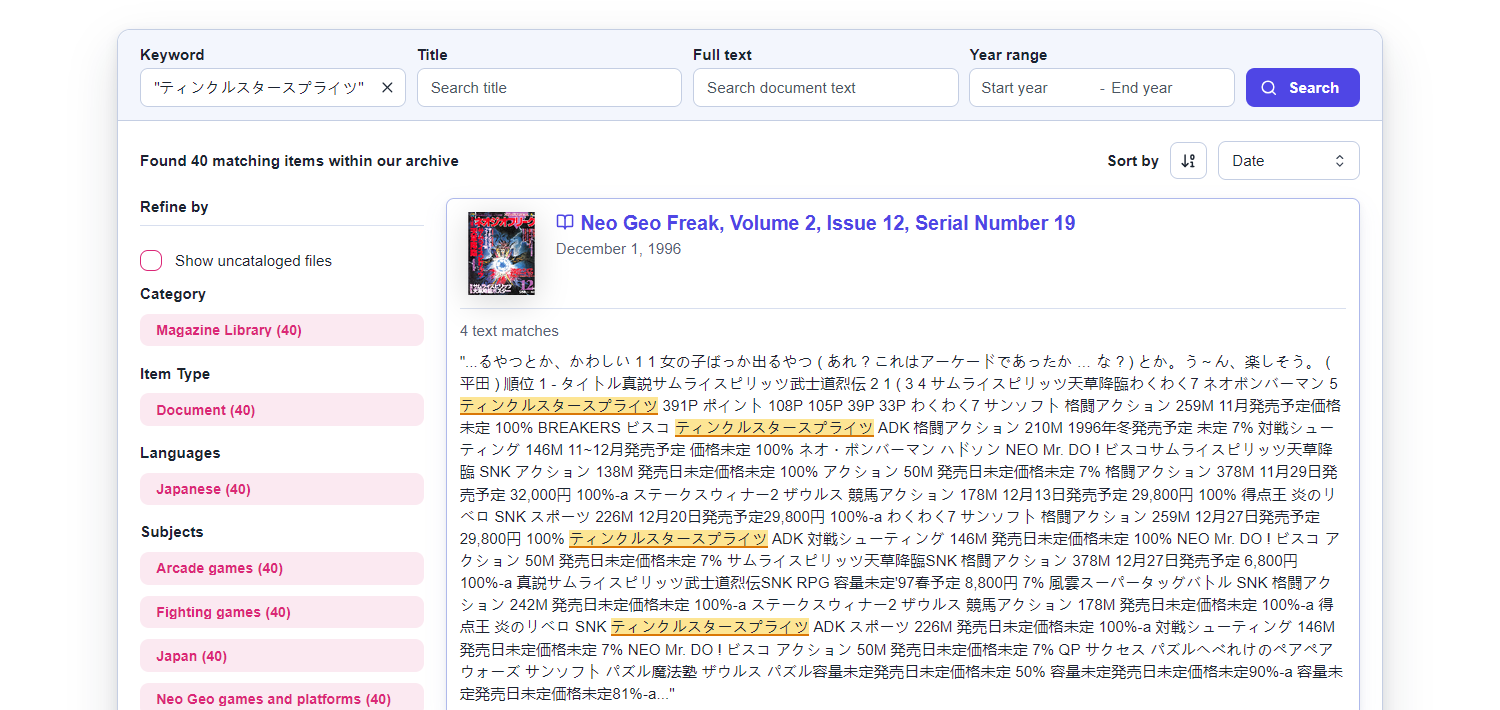
Today, as our pilot project, we’re launching research access to Neo Geo Freak, a magazine that covered games for Neo Geo home and arcade platforms from 1995–2000.
Neo Geo Freak felt like a good practical starting place for us. Last year, a generous community member donated the entire run of Neo Geo Freak to our library, and the magazine had already been digitized by the user Japanese Magazine Scans, both of which reduced the amount of work on our end to start exploring what it would take to add Japanese materials to our digital archive.
More importantly, though, Neo Geo Freak is also a good example of the unique material that can found in Japanese publications. Neo Geo platforms performed especially well in Japan relative to the rest of the world, making this an excellent candidate for the sort of sustained coverage you wouldn’t find in the English-language press.
However, adding Japanese magazines to our library was not as simple as uploading a bunch of PDFs. We maintain a high standard for how we present materials in our archive, and for a content-dense magazine written in a language that our staff isn’t fluent in, meeting those standards was easier said than done.
First, we worked with our community of peers to determine the best methods for Japanese script recognition. Professional archivists in Japan pointed us towards their preferred libraries for Japanese document transcription, which we integrated into the text mapping toolset that we use for English-language magazines.
We believe the result is the most accurate text-searchable Japanese magazines currently in any digital archive. We verified the results with game history researchers who use Japanese materials to ensure that the output is reliable and usable at scale.
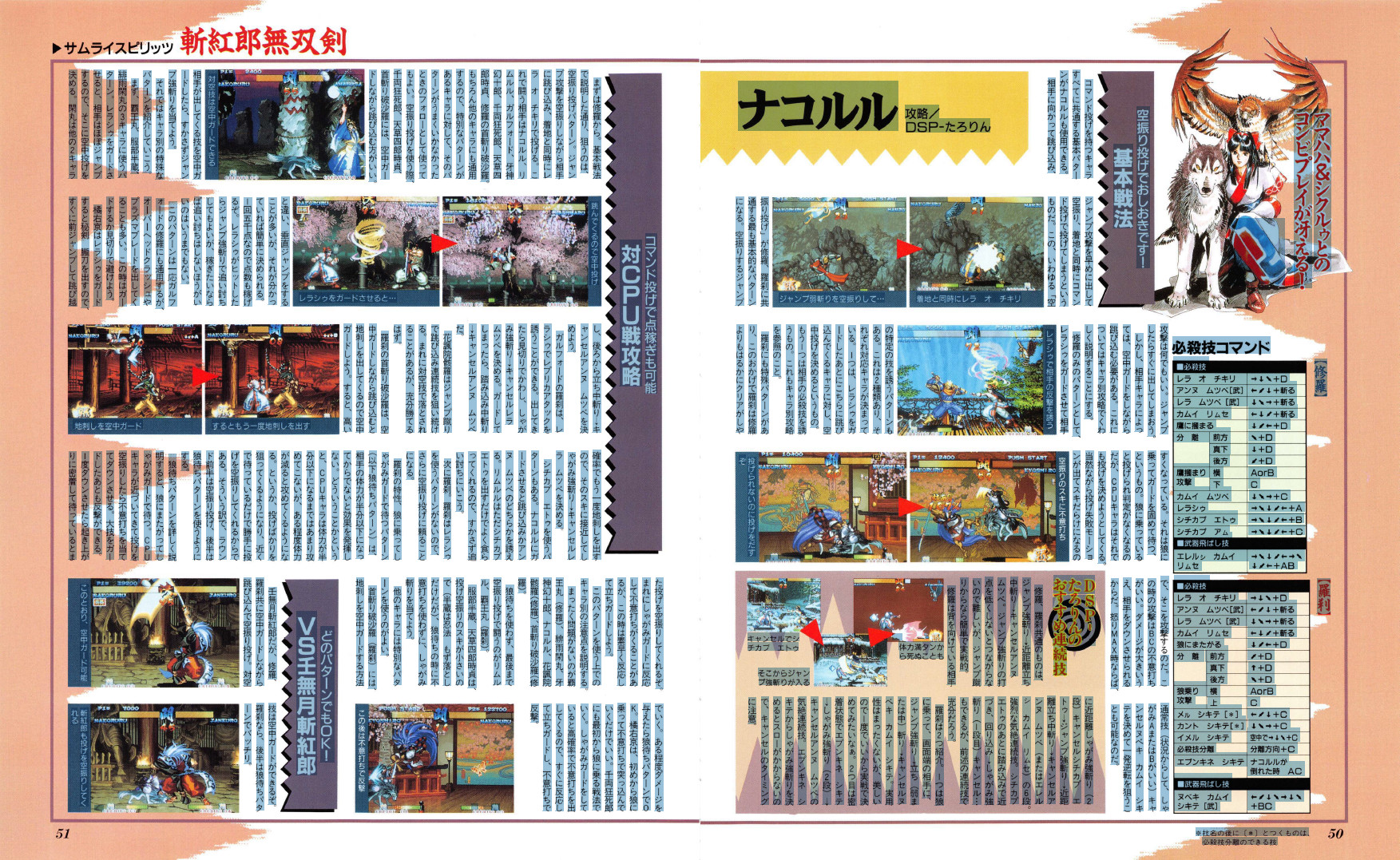
To make Neo Geo Freak more discoverable for an English-speaking audience, we took the additional step to index the major articles from complete run of the magazine in English. Rather than attempting to translate 10,000 pages of Japanese text, we assembled a group of Japanese-fluent volunteers to create a list of major articles and interviews for each issue.
We think this is a practical and efficient method for making these magazines’ contents more accessible, while avoiding the pitfalls associated with automated bulk translation. Users are encouraged to translate magazine text using their own tools of choice as needed—even just using their phone camera.
Full support for Japanese magazines also required some improvements to our digital archive platform. New features we’ve added for this pilot project include filtering items by language, displaying right-to-left page layouts, and supporting Japanese text without interword spacing in search results.
We also went back and re-processed Japanese materials that were already in our digital archive, such as our collection of FromSoftware promotional material, to match our new standards.
What’s next
This is—hopefully!—the beginning of a commitment from us for more international materials in our library. The Video Game History Foundation does not have the most extensive collection of Japanese-language magazines, but all this new structure will make it easier for us to work with the materials we do own.
We also are open to working with other organizations and collectors who have more extensive libraries of Japanese material, but would need support to turn them into a research resource.
This project was made possible thanks to the efforts and input of our community volunteers, who had the subject and language expertise we needed to even consider undertaking this pilot. Thanks to Brian Clark, Rob Curl, Misty De Méo, Dave Fishel, Akito Inoue, Stef “pidgezero_one” Kischak, Lillian McIntyre, Stephen Meyerink, and Adria Miller for their help.
How are we doing?
We want to hear from you about how we’re doing so far. Adding Japanese publications to our research archive is an exciting new step for us, and we want to be sure we’re treating these materials with the respect and fidelity they deserve.
If you work with Japanese-language materials in your research, please let us know what you think. Positive feedback is welcome! We’re eyeing another batch of (gulp) 70,000 pages that we’re planning to add in the coming years, so we want to make sure we’re on the right track before going further.
(And if you are proficient in Japanese, we’d love your help indexing the next magazines we’re planning to add! Please reach out to our library team.)
Thank you to everyone who uses our digital archive and has encouraged us to continue expanding our collections. We’re building our library to support to the study of video game history, and we’re excited every day by how you use these resources.